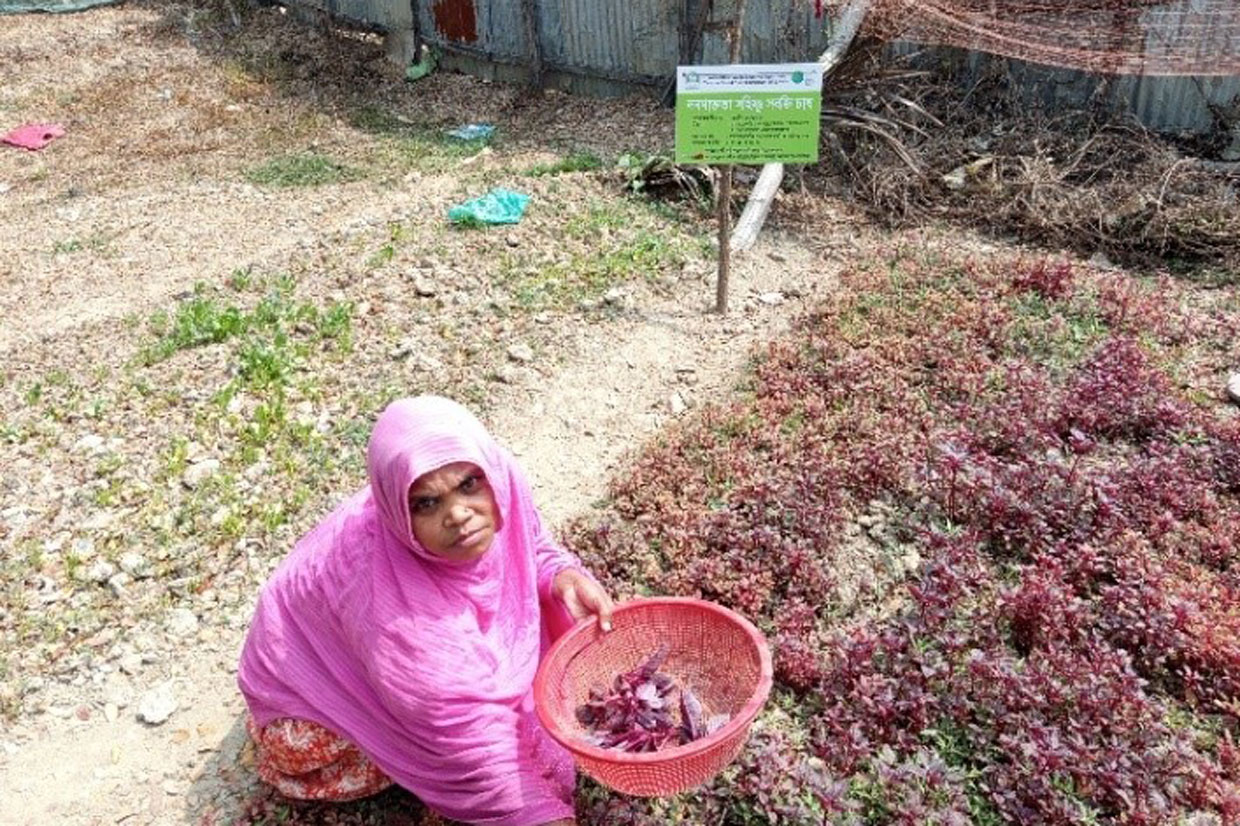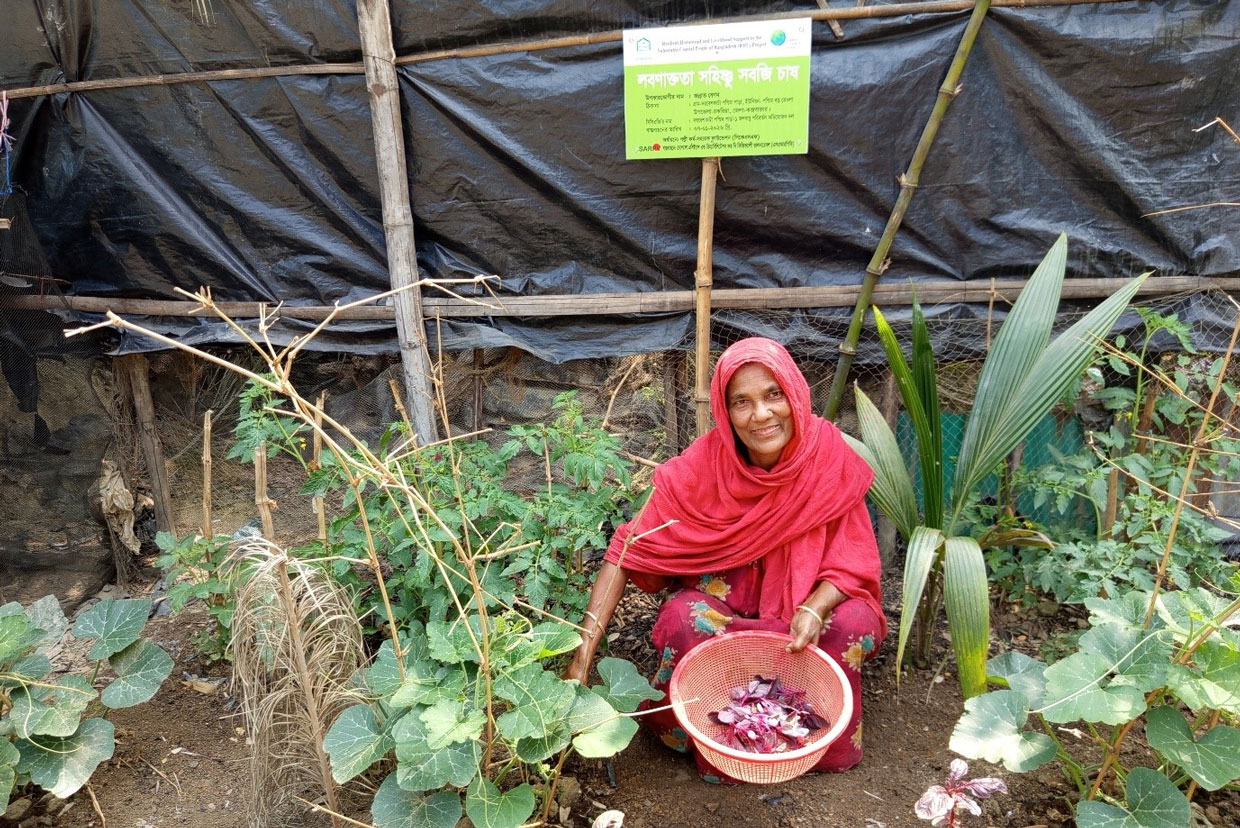
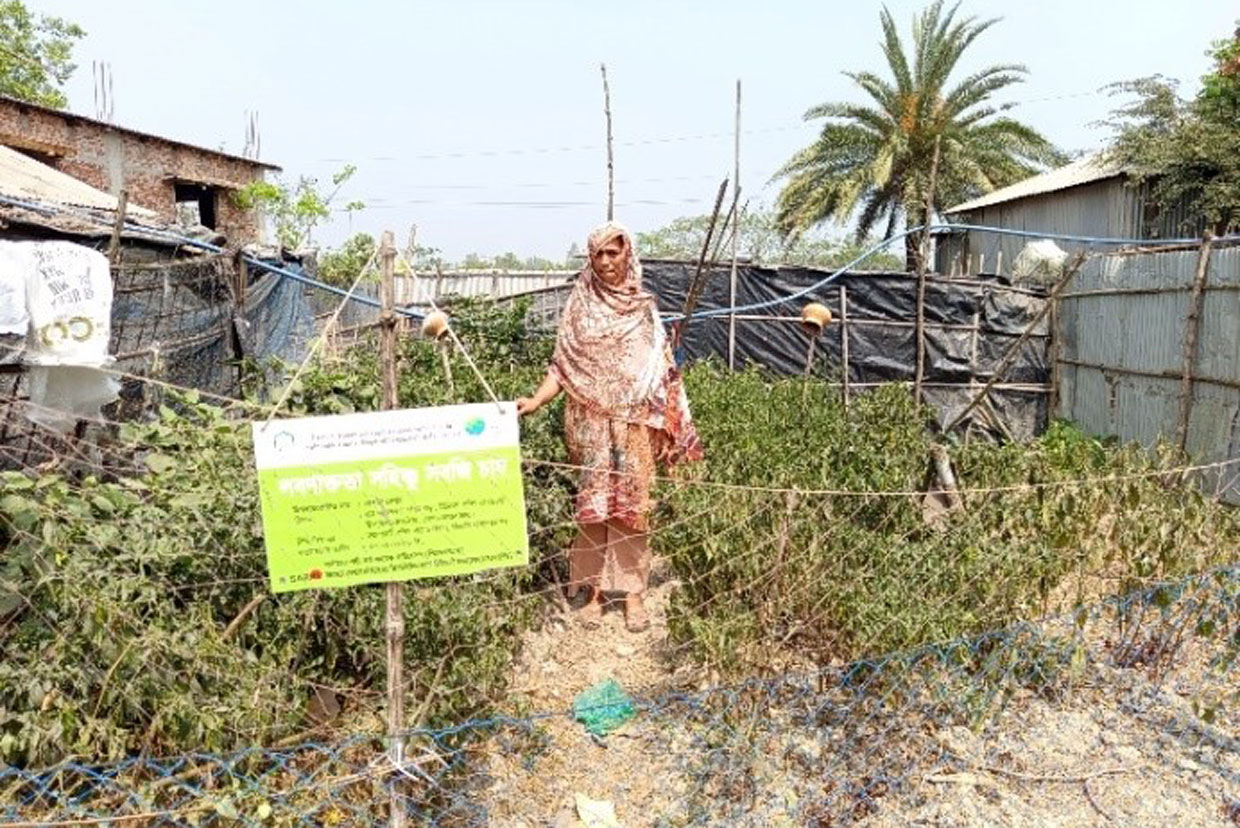
Cultivation Of Saline -Tolerant Vegetables Within Homestead Areas
Historically, vegetable cultivation in the coastal regions of Bangladesh has been severely hindered by high soil salinity and the poor water-retention properties of sandy terrain. These environmental stressors typically inhibit seed germination and lead to premature crop failure, which has long discouraged local farmers from pursuing traditional agriculture. Consequently, these areas faced significant challenges regarding food security and sustainable land use.
To mitigate these barriers, the Resilient Homestead and Livelihood Support (RHL) project—a PKSF initiative—launched a comprehensive feasibility program to reintroduce agriculture through climate-adaptive methodologies. By equipping selected beneficiaries with salt-tolerant seed varieties, organic fertilization techniques, and advanced irrigation strategies, the project successfully demonstrated that productive farming is attainable even in adverse coastal conditions.
Under the technical supervision of agricultural experts, participating households have successfully transitioned their homestead plots into thriving gardens. This initiative has not only bolstered household income and nutritional security but has also established a scalable model for climate-resilient farming, proving that strategic innovation can overcome the most rigorous environmental constraints.